January 28, 2026
Talking about the Value of College
I attended the NECHE conference where public perception of higher education's value was top of everyone's minds.

Ross E O’Hara, Ph.D.
About

5 min read

Public perception of the value of higher education is eroding despite the returns remaining quite high.
Changes to policy and pedagogy can improve academic performance and get more students to graduation.
Leveraging behavioral science to foster students' sense of belonging is also key to long-term outcomes.
Public trust in the value of higher education is eroding: in November 2025, nearly two-thirds of U.S. registered voters didn't believe a four-year degree was “worth the cost.” What’s more, this distrust is influencing policy. The FAFSA now flags colleges whose graduates have “lower earnings” versus those with a high school diploma. The same metric will be used by the Department of Education to determine whether college programs are eligible for federal financial aid.
A college degree, however, remains absolutely worth the cost. According to Georgetown’s Center on Education and the Workforce, associate’s degrees have the highest returns after 10 years. Bachelor’s degrees, which typically cost more and delay entry into the workforce, lead to the largest returns over 30+ years.
But students only gain those benefits if they earn a degree. This was the prevailing message at the annual conference of the New England Commission on Higher Education (NECHE) last month in Boston. How do we improve performance and support so that our students realize the economic value of college, and we begin to shift these erroneous public perceptions?
Improving academic performance
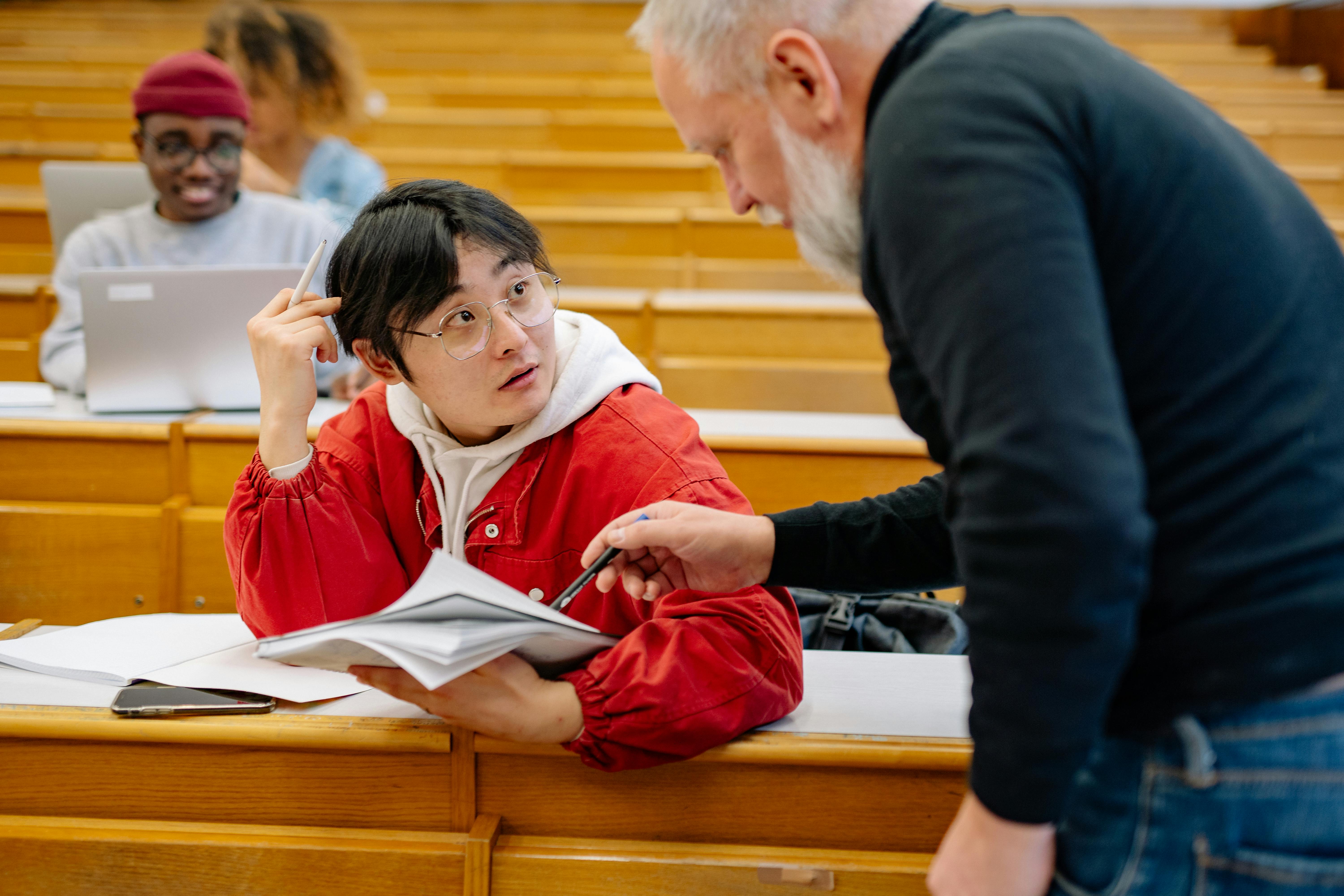
The first step to ensuring students get good value from college is ensuring they do well in class. Presenters from Keene State (NH) shared ow around one-third of students who received a D, an F, or withdrew from aclass (DFW) left their university, with multiple DFWs in a semester a bright redflag for stopping out.
Faculty and staff at Keene State identified courses with high DFW rates and together developed solutions to improve student performance, such as:
• The majority of DFWs in Psych 251 (statistics) were by first-year students, so they stopped first-year students from taking the course. They also required math tutoring for students who entered with <85% on a readiness exam.
• Intro to Macroeconomics added in-class reviews of worksheets and the opportunity to retake one exam.
• Public Speaking included a pre-assessment of speech anxiety and provided small-group support to those students who needed it.
• Introductory Physics added exam reflections to evaluate students’ study process and make productive changes before the next exam.
Whether by changing policy or pedagogy, Keene State reduced DFW rates and increased the earning of A’s and B’s. Although these changes will keep more students on track to a degree, performance is not the only predictor of persistence.
Bolstering student support
Students also need to feel accepted in college to persist and enjoy the spoils of a degree. I presented with our partners John Duff from North Shore Community College (NSCC) and Dr. Kevin Li from Quinsigamond Community College (QCC) on how their institutions are using the Persistence Plus (P+) evidence-based student support platform to improve student outcomes.
John shared how P+ has helped NSCC students feel a greater sense of belonging: “the students who actively engaged with [P+] felt much more like a part of the community.” These feelings were fostered by targeted messages that normalized social challenges and encouraged students to reflect on their college experience. A stronger sense of belonging was associated, in turn, with an increase in registration. NSCC is also examining conversations between students and P+ for opportunities to improve campus culture.
Kevin shared how P+ has reduced equity gaps and increased retention at QCC. First-generation students, lower-income students, and students of color, for example, have been targeted with evidenced-based messaging to boost belonging, self-efficacy, and resiliency. But QCC hasn’t stopped there, asking itself, “How can we leverage behavioral science more broadly when we work with students?” QCC has applied behavioral science strategies to how advisors engage students facing or having experienced academic dismissal to reduce stigma and build effective plans for getting back on track.
Ensuring the full value of college
When a student begins college, there are nearly infinite variables that determine whether they will graduate and have increased short-term earnings. It’s only by designing institutions that shepherd more students to graduation will we maximize their value. The factors most under our control are what happens to our students on campus and in the classroom. Focusing on what we do best in higher education will go a long way toward improving public perception of the value our important work.
If you would like to discuss more about how we can improve student success and persistence, please reach out. I’d love to chat!
Subscribe to our newsletter
Stay updated on our latest posts and research-backed insights.






















Ross E O’Hara, Ph.D.
Chief Learning Officer
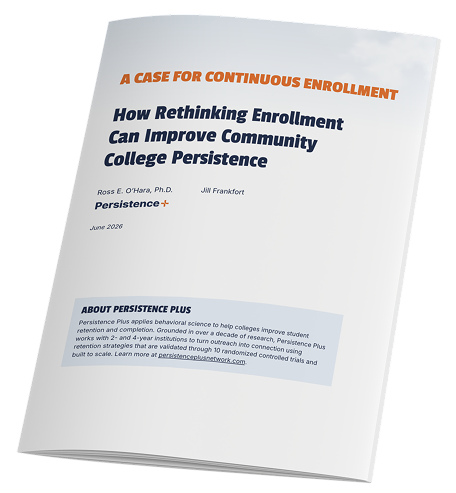
Dr. O'Hara is Chief Learning Officer at Persistence Plus, where he applies his expertise in behavioral science to develop scalable interventions that improve college student retention. He has developed motivational and empathetic messaging for college students for over 11 years, and he currently leads a Lumina Foundation-funded action research project on continuous enrollment in community colleges. Dr. O’Hara earned his Ph.D. in social psychology from Dartmouth College and completed post-doctoral fellowships at the University of Missouri and the University of Connecticut. His research has appeared in numerous peer-reviewed journals, including AERA Open and the Journal of Postsecondary Success, and he has contributed to Behavioral Scientist, the EvoLLLution, and EDUCAUSE Review, among others.
%201.svg)