August 26, 2026
4 Lessons for Innovating in Community Colleges
Dr. Amy Bosley, President of Northwest Vista College, shared lessons for making big changes to the way a college works.

Ross E O’Hara, Ph.D.
About

5 min read

Northwest Vista College no longer cancels in-person courses for low enrollment.
Vista students who register at the last minute have classes designed for them taught by the most successful instructors.
Vista students can earn a degree in 2 years while only attending on Saturdays, free childcare included.
If we really want to change poverty in our community, we can't leave a stone unturned.
Leaving no stone unturned has been a clarion call for Dr. Amy Bosley since she became President of Northwest Vista College 3 years ago. With a north star to end intergenerational poverty in their community of San Antonio, Dr. Bosley has led Vista through big changes, particularly in how they think about course scheduling.
I recently had the opportunity to host Dr. Bosley for a webinar and was inspired by her leadership in enacting systemic change at Vista. I took away four key lessons for higher education leaders looking to shake things up and radically refocus their institution on student success.
Honoring the Past
Dr. Bosley shared that change is not about discarding the past but honoring it. When she arrived, Vista was a successful community college by most metrics. Yet the scourge of poverty is only getting worse in San Antonio.
It is critical to listen very carefully to what's happening in the community and what the history is, and to honor that history. They were the right decisions at the time, but they're not the right decisions anymore, because who we're serving with our mission has changed considerably. So, it's important to start a new conversation, to start setting the sights higher, to just be bold and courageous and call the things out that we've got to fix if we're going to get a lot better.
Dr. Bosley emphasized that institutions must consistently and critically reevaluate themselves to support the students they now serve in the conditions in which they live. The world is constantly shifting and colleges cannot afford to stay static.
Leading with Data
That critical reevaluation begins with data. Higher education has more data about our students, classes, instructors and resources than ever before, we just need the wherewithal to dig in and act. Dr. Bosley has demanded that Vista’s decisions be led by data.
Bringing data into the conversation, in a really transparent way…I did a ton of open town halls [where] you can ask me anything. I'm going to tell you what I know and what I don't know, but I'm also going to call out the things that we've got to make sure are getting markedly better, much faster.
Data has helped Vista vastly reshape their course schedule. Dr. Bosley created a centralized scheduling team, led by a former English chair, within college services. Their role is to convene those responsible for scheduling to look at data together and innovate how to better serve students and maximize institutional efficiency.
We've been building schedules the same way forever. They are built in academic disciplines. They're oftentimes built around faculty availability and interest. They're built in silos. And the most challenging part about that is students don't take courses like that. Students take courses across a variety of disciplines, and they need to be able to take it in a coherent schedule.
Rebuilding Trust with Students
Perhaps the most surprising and intriguing scheduling change is that Vista no longer cancels in-person courses for low enrollment. Dr. Bosley discussed how some of the current mistrust in higher education is self-inflicted, and that not cancelling courses is a “critical component to a foundation of trust.”
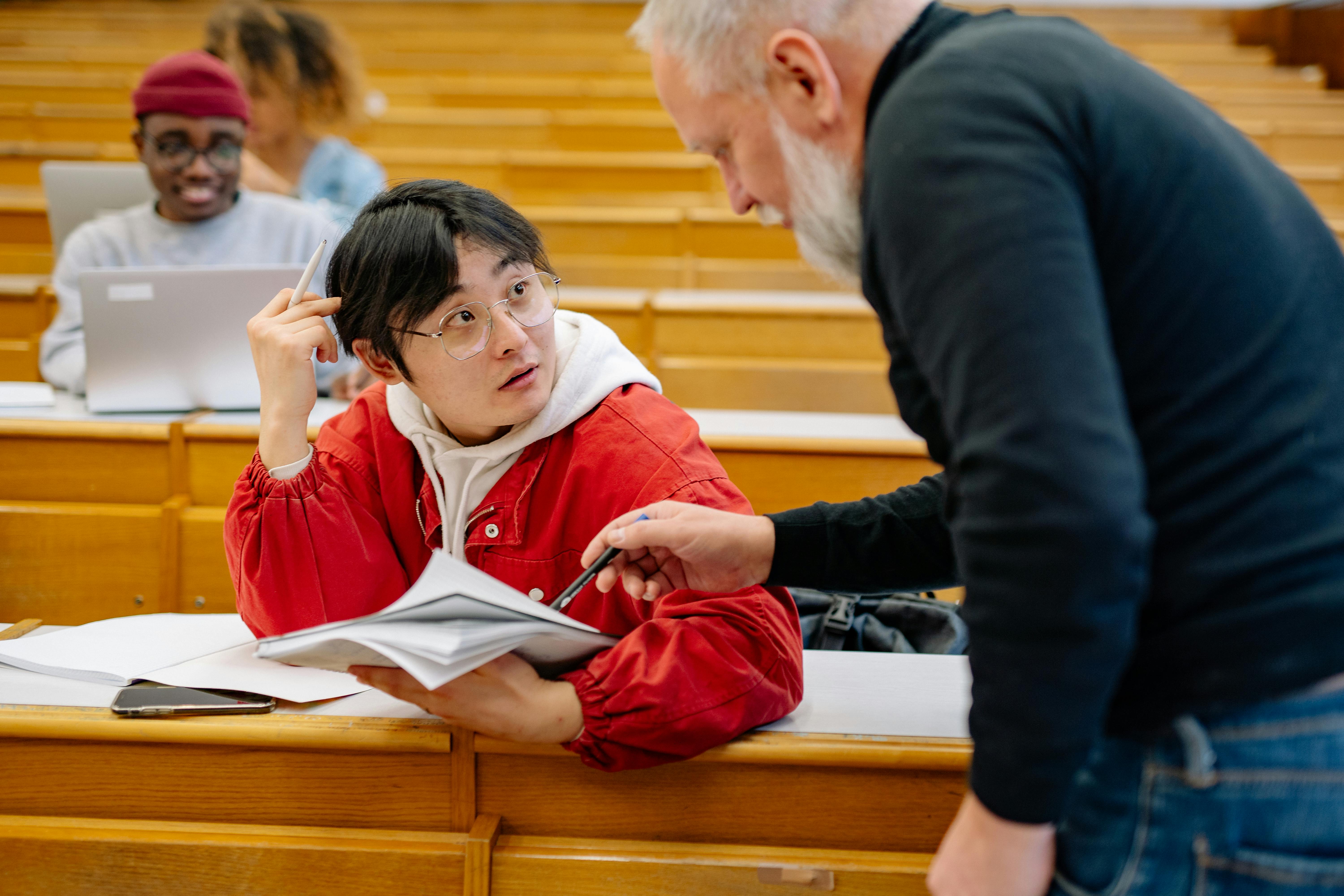
We invited students to arrange their lives around our offering that we chose to offer. And we're not going to rip the rug out from under them and say, because 7 of your friends didn't register for that class, now you have to disrupt your life and your schedule. Or say something like, that's okay, you can just take it online. Or, don't worry, we have a class on Thursdays at 4, when you are at Tuesdays at 10. Those don't work for the learners that we are really wanting to make sure we're serving very well.
To make this system financially viable, Vista leverages data to decide which courses to offer and when. Importantly, Vista maximizes fill rates in online sections to offset potential losses from low-enrolled, in-person courses. And when a course does run with low enrollment, they think critically about what needs to change or whether to offer that course again. Ultimately, Dr. Bosley described classes as a college's “product” and she intends Vista to stand behind theirs.
Meeting Students Where They Are
Rebuilding trust also comes by designing a schedule that fits students’ circumstances rather than tries to shape student behavior to convenience the institution. For example, most community colleges try desperately to get students to enroll as early as possible. Vista, instead, has made certain courses available only for students who register at the last minute—students who often have the most challenges being successful in college.
We've been shocked for years that students are showing up the weekend before classes start wanting to take classes. We have to stop being surprised by that. This is now just a pattern that we need to be prepared for. What we have built is a 14-week schedule that we have held back from regular registration that we can provide to students who show up closer to the beginning of the 16-week term. And we have for them two things: A package of classes that’s appropriate for momentum, and we've asked our most successful faculty to hold back and teach those classes.
Another scheduling innovation has been a slate of courses that allow students to graduate in 2 years while only attending on Saturdays. Classes are yoked to maximize success, based on years of academic performance data, and scheduled strategically to maintain students’ momentum toward a degree. Moreover, free on-campus childcare (in partnership with the local YMCA) is available all day.
Want to Learn More about Scheduling Reform?
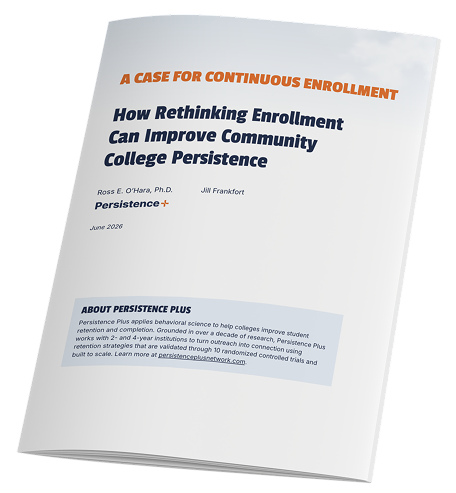
Dr. Bosley described these changes as “a big experiment,” but one that is necessary if Vista is going to achieve moonshot goals like ending intergenerational poverty. Vista, however, is not the only institution innovating on how colleges build schedules and register students. To learn more about this zeitgeist of scheduling reform, download our research brief on Continuous Enrollment and reach out to us to schedule a conversation.
Subscribe to our newsletter
Stay updated on our latest posts and research-backed insights.



























Ross E O’Hara, Ph.D.
Chief Learning Officer
Dr. O'Hara is Chief Learning Officer at Persistence Plus, where he applies his expertise in behavioral science to develop scalable interventions that improve college student retention. He has developed motivational and empathetic messaging for college students for over 11 years, and he currently leads a Lumina Foundation-funded action research project on continuous enrollment in community colleges. Dr. O’Hara earned his Ph.D. in social psychology from Dartmouth College and completed post-doctoral fellowships at the University of Missouri and the University of Connecticut. His research has appeared in numerous peer-reviewed journals, including AERA Open and the Journal of Postsecondary Success, and he has contributed to Behavioral Scientist, the EvoLLLution, and EDUCAUSE Review, among others.
%201.svg)